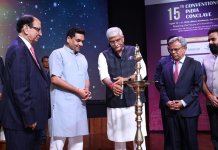
The 15th International Heritage Tourism Conclave (IHTC), organised by the PHD Chamber of Commerce and Industry (PHDCCI) with the support of the Ministry of Tourism, Government of India, concluded successfully on 24 July 2026 at the Salar Jung Museum, Hyderabad. Held under the theme “ख़याल विरासत का (Care for Heritage)”, the conclave brought together senior government officials, policymakers, tourism boards, museum leaders, conservation experts, hospitality professionals, academicians, technology innovators and industry stakeholders to discuss strategies for preserving India’s rich cultural heritage while unlocking its tourism and economic potential.
The conclave concluded with a strong national call to reposition heritage – particularly culinary heritage – as a key pillar of India’s tourism economy through investment-led conservation, stronger public-private partnerships, technology adoption and active community participation.
Supported by Telangana Tourism, Jharkhand Tourism, Madhya Pradesh Tourism, Rajasthan Tourism and Tamil Nadu Tourism, the conclave served as a platform for dialogue on sustainable heritage tourism and destination development.
A major highlight of the event was the release of the third edition of the PHDCCI–KPMG Report on Heritage Tourism, which presented strategic recommendations on policy reforms, destination planning, investment facilitation, digital innovation, skill development and enhanced private sector participation. The report underscored heritage tourism’s growing role in employment generation, regional development and cultural preservation.
Addressing the gathering, Mr. Venkatramana R. Hegde, Additional Director General, Ministry of Tourism, Government of India, reaffirmed the Ministry’s commitment to strengthening India’s tourism ecosystem through closer collaboration with states and industry. He highlighted India’s progress in tourism infrastructure, heritage development and destination competitiveness while stressing the need for improved visitor experiences and stronger industry partnerships.
Dr. Abhay Arvind Bedekar (IAS), Additional Managing Director, Madhya Pradesh Tourism Board, emphasised that heritage conservation and tourism development must progress together. He highlighted Madhya Pradesh’s efforts to preserve both tangible and intangible heritage while promoting tourism through innovative partnerships and community participation.
Speaking on Telangana’s tourism vision, Mr. L. Ranjeet Nayak (IFS), Director – Tourism, Government of Telangana, outlined the state’s focus on responsible private participation, destination development, Artificial Intelligence-enabled visitor experiences and skill development for heritage guides and interpreters.
Welcoming delegates, Dr. Ranjeet Mehta, CEO & Secretary General, PHDCCI, stated that heritage tourism had emerged as a powerful catalyst for economic growth, employment generation and community empowerment. He emphasised the need to combine conservation with innovation through digital technologies and stronger collaboration among government, industry and cultural institutions.
Delivering the theme address, Mr. Anil Parashar, Chair – Tourism & Hospitality Committee, PHDCCI, highlighted the importance of transforming heritage tourism into immersive cultural experiences by integrating museums, crafts, cuisine, performing arts and living traditions with emerging technologies such as Artificial Intelligence, immersive storytelling and virtual reality.
Mr. Gautam Jain, Chair – Telangana Chapter, PHDCCI, described Hyderabad as a city where heritage, hospitality and modern infrastructure converge, while Mr. Sunil Kumar, Co-Chair – Telangana Chapter, PHDCCI, stressed that authentic cultural experiences, digital connectivity, infrastructure development and community participation would define the future of tourism.
The inaugural session concluded with a vote of thanks by Mr. Rajan Sehgal, Co-Chair – Tourism & Hospitality Committee, PHDCCI, who reiterated the importance of preserving both tangible and intangible heritage for building a sustainable and globally competitive tourism sector.
During the conclave, PHDCCI and Axis Bank signed a Memorandum of Understanding (MoU) to strengthen collaboration in the tourism and hospitality sector. The agreement was signed by Dr. Ranjeet Mehta and Mr. Shrikesh P., Regional Branch Banking Head, Axis Bank, with the objective of enhancing industry engagement and supporting initiatives that contribute to the sector’s growth.
The conclave featured four thematic sessions covering The New Age of Museums, Food is Memory, Shared Heritage, Shared Responsibility, and Tech, AI & the Future of the Past. Experts from government, museums, academia, hospitality, heritage organisations and technology companies explored topics including museum transformation, culinary heritage, public-private partnerships in conservation, CSR-led initiatives, immersive technologies, Artificial Intelligence, digital twins, multilingual AI and virtual heritage experiences.
More than 30 structured B2B meetings were organised between state tourism boards, hospitality companies, tour operators, travel businesses and cultural enterprises, fostering collaboration and business opportunities across the heritage tourism ecosystem.
Extending the discussions beyond the conference venue, PHDCCI curated immersive heritage experiences for delegates. A pre-conclave heritage walk at Taj Falaknuma Palace showcased Hyderabad’s royal architectural legacy and conservation practices, while the concluding heritage walk through Charminar, Laad Bazaar and the historic Old City enabled participants to experience the city’s living heritage, traditional crafts, historic markets and renowned culinary traditions firsthand.
The conclave received support from IndiGo, Axis Bank, IRCTC, Bakshi Transport Service, KPMG, Association of Domestic Tour Operators of India (ADTOI), Indian Association of Tour Operators (IATO), Indian Heritage Hotels Association (IHHA) and the Travel Agents Association of India (TAAI).
The successful conclusion of the 15th International Heritage Tourism Conclave reaffirmed the importance of collaborative action, sustainable investment, digital innovation and community engagement in positioning heritage tourism as a major driver of India’s future tourism growth.