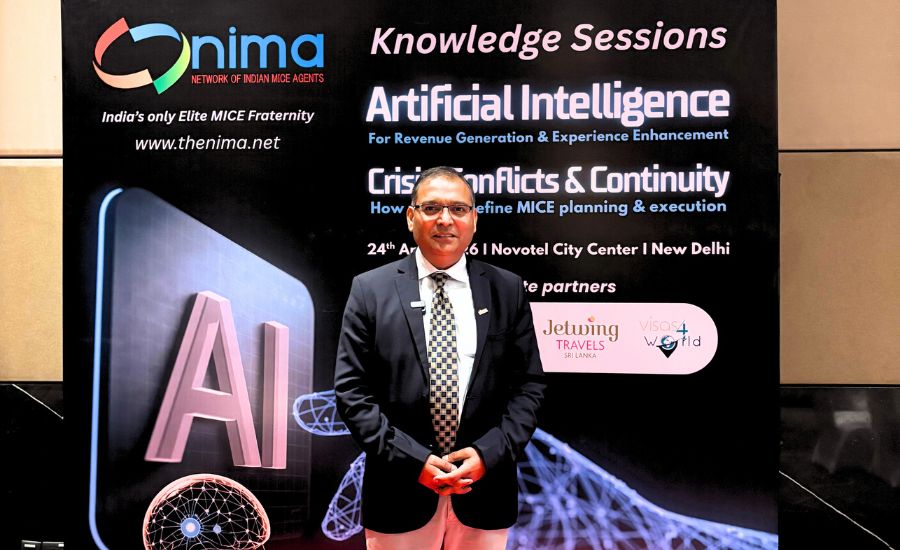
The Network of Indian MICE Agents (NIMA) is urging greater collaboration among domestic MICE stakeholders as nearly 70% of demand in India’s meetings, incentives, conferences, and exhibitions (MICE) sector is now being driven by domestic travel. The shift highlights a significant transformation in the country’s business events landscape, with growing reliance on intra-country opportunities rather than international movement.
According to Vikas Khanduri, Advisor at NIMA, the association is actively encouraging agents to leverage intra-network partnerships across cities. This collaborative approach aims to help industry players tap into expanding domestic demand while strengthening service capabilities and regional integration. By fostering cooperation between agents in different cities, NIMA seeks to create a more connected and efficient ecosystem that can better respond to evolving client requirements.
India’s emergence as a strong MICE destination is further supported by robust infrastructure growth. With over 100 airports, improved air connectivity, and the rapid expansion of convention centres and hospitality infrastructure, the country is well-positioned to handle increased volumes of domestic business events. These developments are enabling smoother logistics, wider destination choices, and enhanced event experiences across both metro and emerging cities.
NIMA is also focusing on enhancing knowledge capabilities within its network, ensuring that agents are equipped to align with changing market dynamics. As client expectations evolve and event formats become more sophisticated, building expertise and adaptability has become critical for sustained growth. The association’s initiatives aim to empower agents to deliver higher-value services and remain competitive in a fast-transforming environment.
The growing dominance of domestic MICE demand reflects broader trends in India’s tourism and corporate travel sectors, where cost efficiencies, improved infrastructure, and regional accessibility are driving preference for in-country events. This shift is expected to unlock new opportunities across tier-II and tier-III cities, further decentralising the MICE ecosystem.
Overall, NIMA’s push for collaboration underscores the importance of unified industry efforts in maximising domestic potential, strengthening networks, and positioning India as a resilient and future-ready MICE destination.